FLEXIBLE PACKAGING SOLUTIONS
We design flexible packaging solutions for powdered soft drinks, instant beverages, and powdered products, combining high moisture barrier properties, high-definition visuals, and sustainable options tailored to each product profile.
PET/PE and BOPP/PE laminates with a moisture barrier to prevent caking.
Three-layer structures with EVOH for products containing oxygen-sensitive active ingredients.
Single-material options with Plaxi HB for brands committed to sustainability.
Technical support from the specification phase through production.
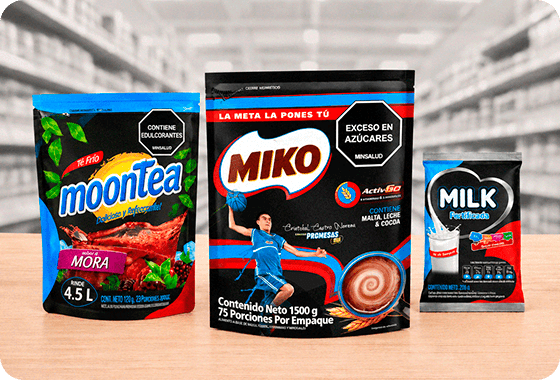
Powdered soft drinks and instant beverages are highly hygroscopic products: they quickly absorb moisture from the environment, causing caking and a loss of flow that directly affect the consumer experience. The packaging is the only barrier between the product and the environment, and its technical specifications determine whether the product arrives in optimal condition at the time of consumption.
Litoplas works with companies in the powdered beverages and instant products sectors in Colombia and Central America, developing flexible packaging solutions with functional moisture barriers and high-definition graphics to compete in the mass market, as well as sustainable alternatives for brands with active environmental commitments.

Moisture is the main enemy of powdered products. A high WVTR in the material causes the product to gradually clump, which the consumer notices when opening the package—even before the expiration date. The WVTR specification must take into account the climatic conditions of the target market, which in the Colombian Caribbean and Central America are significantly more demanding than in markets with dry climates.
Powdered soft drinks with added vitamins, minerals, or flavorings contain active ingredients that are sensitive to oxygen. The degradation of these components is not always visible or detectable through organoleptic testing until advanced stages, making it critical to specify the OTR correctly from the packaging design stage.
Powdered beverages compete in a mass-market channel with a high density of products. Color accuracy, print sharpness, and graphic consistency across batches are key differentiators at the point of sale.
Powdered products are packaged on high-speed VFFS lines in formats ranging from individual sachets to 1-kg packages. The material must have stable sealing parameters and consistent airtightness across units to ensure a moisture barrier throughout the entire production run.
Products such as Suntea, instant soft drinks, and mass-market powdered beverages require packaging structures with good moisture barrier properties, high print quality, and a competitive per-unit packaging cost.
– Dual-layer PET/PE laminates with a functional moisture barrier and high print fidelity for modern and traditional retail channels.
– BOPP/PE laminates for brands committed to sustainability without compromising the required moisture barrier.
– Individual sachet formats for single-serve portions in the foodservice, vending, and institutional channels.
– Zipper-seal Doypacks for family-size packages with resealable closures and higher net weight.
Products such as Milo, vitamin-enriched beverages, and powdered supplements contain oxygen-sensitive active ingredients that require an additional barrier beyond the WVTR.
– Three-layer structures with EVOH for medium-to-high oxygen barrier performance in products containing vitamins, minerals, or flavorings sensitive to oxidation.
– Single-material PE options with Plaxi HB for brands with active sustainability commitments, technically validated for products requiring a medium barrier level.
– High-integrity four-seal sachets for single-dose applications with a high level of airtightness.
Structures made entirely of high-performance polyethylene that are compatible with conventional mechanical recycling streams. For carbonated beverages requiring a medium-level barrier, this option enables progress toward circularity without compromising product protection.
For high-turnover powdered soft drinks that currently use PET/PE structures, BOPP/PE laminates offer greater compatibility with mechanical recycling streams while maintaining the necessary moisture barrier.
Optimized structures allow for a reduction in material thickness without compromising barrier properties, thereby reducing plastic consumption per unit and improving roll yield on the production line.
Premature caking is generally caused by an insufficient moisture barrier for the climatic conditions of the market where the product is distributed. It may be caused by a WVTR of the material that is too high, a poor seal on the packaging line, or storage conditions that exceed those anticipated. A technical evaluation of the material and the sealing process identifies the source of the problem.
PET offers greater rigidity and a better print surface, giving the packaging a more premium look on the shelf. BOPP has better intrinsic moisture barrier properties and greater compatibility with mechanical recycling streams. For high-turnover products where sustainability is a factor, BOPP/PE is the most suitable option. For premium products where the appearance of the packaging is critical, PET/PE is the right choice.
Plaxi technology is a proprietary optimization developed by Litoplas and applied to BOPP structures, which simultaneously improves the material’s body, optical properties, and moisture barrier properties.
In many cases, yes, especially on VFFS lines where the only adjustment required is the sealing temperature. For flowpack and wickett processes, a preliminary technical evaluation is essential.
Please fill out our form, indicating your industry, product type, estimated volume, and any special requirements. Our technical and sales team will contact you as soon as possible.
Tell us about your project, and our team will help you find the right solution.
Al hacer clic en “Aceptar”, usted autoriza que las cookies se guarden en su dispositivo para mejorar la navegación del sitio, analizar el uso del mismo y ofrecer una mejor experiencia de navegación.